Artificial intelligence is opening new possibilities for building more responsive industrial safety systems. AI-powered vision systems can analyze video streams in real time, detect potentially dangerous situations, and trigger automated safety responses before an incident occurs.
Unlike traditional detection methods that rely primarily on motion sensors, AI-based vision systems can recognize both moving and stationary objects. This makes them particularly effective in complex industrial environments where forklifts, pedestrians, and equipment operate simultaneously.
By combining advanced image analysis with automated safety infrastructure, companies can build safety systems that actively monitor the workplace and respond dynamically to changing conditions.
At the core of these solutions are vision systems supported by local neural networks. The system analyzes the image locally, without the need to send raw video data to external servers. It increases operational reliability — the system does not rely on an internet connection, so even in facilities with limited or unstable connectivity, the safety system continues to function without interruption. This is crucial in applications where dependable safety performance is essential. This approach also improves data privacy, as video streams remain within the local infrastructure instead of being transmitted to external cloud services.
Using machine learning algorithms, the system can identify different types of objects within its field of view. It can detect and distinguish between:
• pedestrians
• forklifts
• machinery or obstacles
This contextual detection enables the system to react differently depending on what it sees. For example, the system may trigger a different response when detecting a pedestrian than when detecting an approaching forklift.
Because the neural network operates locally, the system can process information quickly and react in real time.
AI-powered vision systems can be integrated with automated safety infrastructure within warehouses and production facilities.
When the system detects a potentially dangerous situation, it can immediately trigger predefined actions through connected safety equipment. For example, signals from the vision system may:
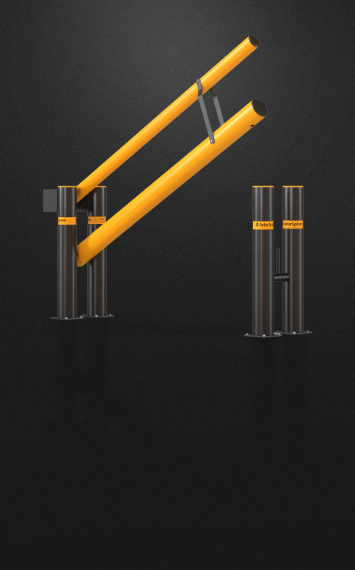
• automatically close a safety gate when a forklift approaches a pedestrian crossing
• activate LED indicators on Gate Protectors or safety bollards, with warning colours changing depending on the detected object
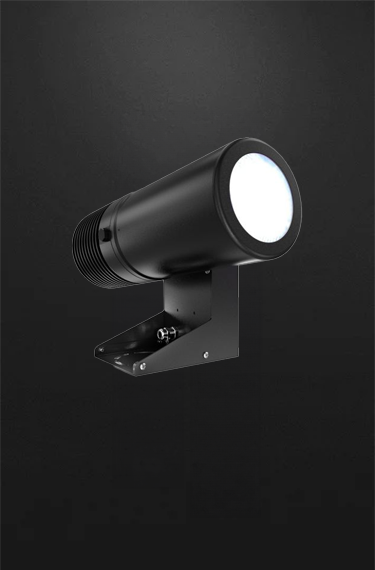
• trigger safety signage projectors to display warning symbols or messages directly on the floor
• send signals to other safety or control systems in the facility
This type of integration allows companies to create dynamic safety zones that react in real time to actual activity on the shop floor.
Another key advantage of AI-based vision systems is the flexibility of configuration. Cameras can monitor defined virtual areas and trigger specific actions when objects appear within those zones.
Detection zones can be adjusted to match the layout and traffic patterns of a facility. These virtual zones are a core feature of Anter System’s AI Vision System, which detects people and forklifts within a 13-metre range and a 150° field of view, with sub-200 ms response times. The system can be configured to monitor specific events, such as:
• a forklift approaching a blind intersection
• a pedestrian entering a vehicle traffic zone
• both a pedestrian and a forklift appearing in the same monitored area
• unauthorized entry into restricted spaces
Each scenario can be assigned a different automated response, allowing safety systems to be tailored to the specific operational needs of the facility.
AI-powered vision systems can significantly improve safety in many areas of warehouses and production facilities. When combined with automated barriers, gates, and LED signalling systems, they allow facilities to respond immediately to potential hazards.
In many facilities, forklifts and pedestrians approach intersections with limited visibility. Vision systems can monitor these areas and detect approaching vehicles or people before they enter the crossing. The system can then activate LED warnings, change signal colours, or temporarily block pedestrian access using automated gates.
Crossings between pedestrian walkways and forklift routes are critical safety points. Vision systems can detect approaching vehicles and automatically close safety gates and activate LED signals that clearly indicate whether it is safe to cross.
Workers often move between storage racks while forklifts travel along adjacent transport routes. When a person exits a rack aisle unexpectedly, they may step directly into the path of an approaching vehicle. AI-powered vision systems can detect both a person in the rack aisle and nearby forklift movement. When a potential collision risk is identified, the system can activate LED indicators on safety bollards or trigger safety signage projectors that display a warning directly on the floor.
In large facilities, intersections often involve multiple traffic directions and limited visibility. By using several cameras working together, vision systems can monitor different angles of the same area and provide early warnings when pedestrians and vehicles are on a potential collision path.
By combining AI-powered vision systems with automated safety infrastructure, companies can significantly improve safety in industrial environments.
The ability to detect both moving and stationary objects, identify their type, and trigger automated responses helps reduce the risk of collisions and dangerous interactions between pedestrians and vehicles.
Instead of relying solely on passive protection or human awareness, facilities can implement active safety systems that continuously monitor the environment and respond immediately to potential hazards.
Learn more about our AI Vision System for detecting people and vehicles.