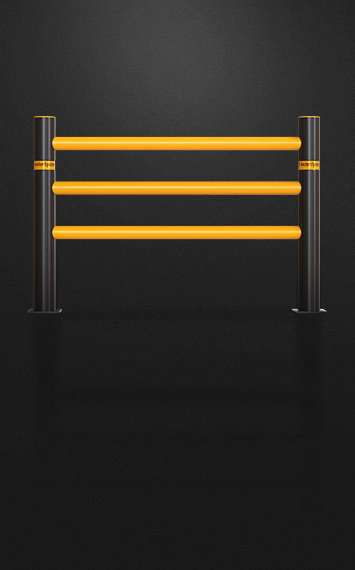
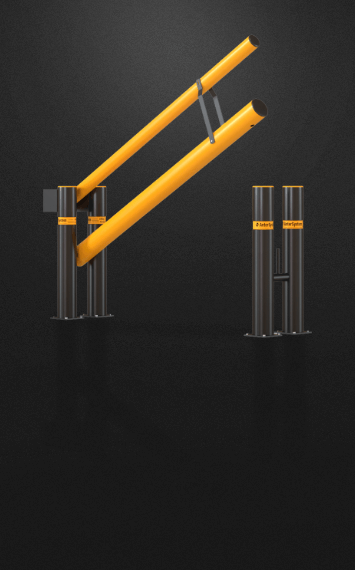
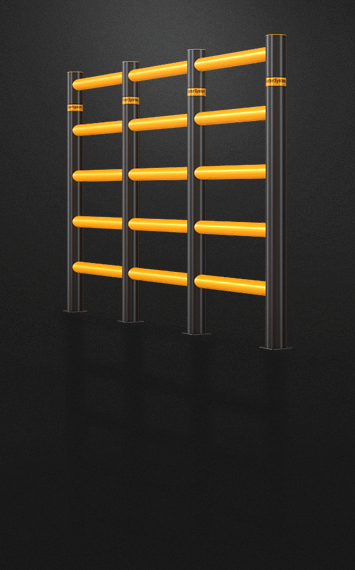
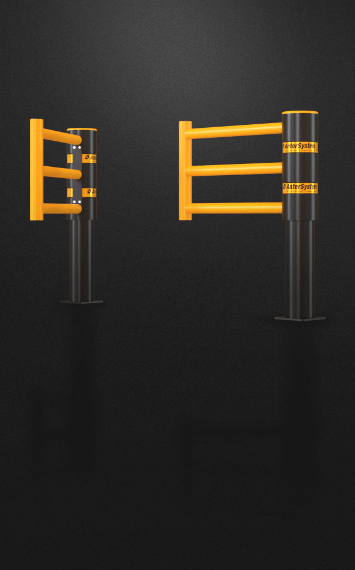
A barrier whose strength has been confirmed in tests based on the PAS 13:2017 methodology offers more than a solid look: it provides measurable, documented protection for people and infrastructure. In this article, we explain what PAS 13 is, what it means for a barrier to meet its requirements, and why it is worth considering when choosing safety solutions.
In warehouses and production facilities, pedestrians work right next to forklifts that, with a load, often weigh several tonnes. A single impact on a rack, column or pedestrian walkway can mean an accident, downtime and costly repairs.
At first glance, most barriers look alike. The difference only becomes visible when a barrier has to absorb a real impact. PAS 13 makes it possible to assess that difference through standardised impact tests, before the barrier is installed at your facility.
PAS 13:2017 is a British code of practice for safety barriers used in traffic management within workplace environments. It applies primarily to warehouses, production facilities and logistics centres where pedestrians and industrial vehicles share the same space.
The standard covers four areas: barrier selection, positioning, installation and maintenance. It also describes methods for testing the impact resistance of barriers. Although it was developed in the United Kingdom, it has become a point of reference for barrier manufacturers and users in many countries.
A barrier tested according to PAS 13 has documented parameters from a controlled impact test, not just the manufacturer’s declaration. The key information a user should know is:
Impact energy depends on the mass of the vehicle with its load and on its speed:
E = ½ × m × v²
Speed is especially important here. A forklift travelling twice as fast hits with four times the energy.
At Anter System, we test barriers on our own High Impact Testing (HIT) machine, following the PAS 13 methodology. The machine recreates controlled collisions with precisely defined impact energy. We can set both the mass and the speed at which it strikes the barrier, so we can reproduce the conditions of a specific vehicle and load. As a result, complete barrier assemblies are tested under repeatable conditions.
Each test checks that the barrier stops the impactor, absorbs the collision energy and stays securely anchored. It also confirms that no structural failure occurs and that the barrier still protects after the impact. Our barriers have also been independently assessed by TÜV Rheinland.
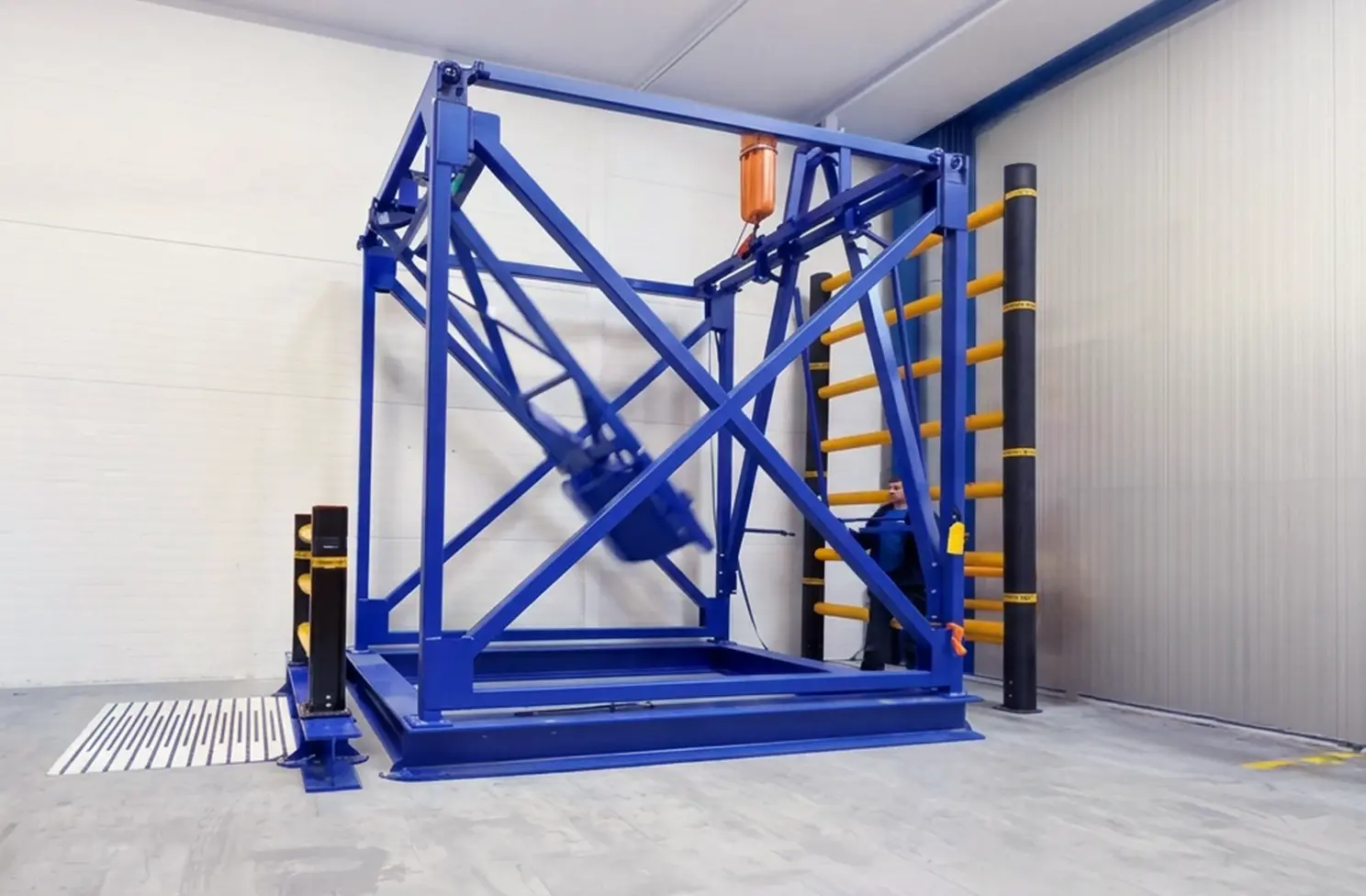
Alongside the HIT machine, we also run tests in which a forklift truck drives into the barrier. They let us check how our barriers perform at different impact angles, just as they would be hit in everyday warehouse traffic.
Certainty instead of claims. A documented test shows what the barrier actually withstood. This matters most where the barrier protects people.
Easy comparison of offers. When manufacturers state impact energy and test angle, barriers can be compared on the same criteria, not just on price per metre.
Pedestrian protection. PAS 13 calls for a safety zone between the barrier and the pedestrian walkway. Planned this way, the barrier won’t intrude into the zone it is meant to protect, even after an impact.
Lower costs after an impact. Flexible barriers absorb impact energy and transfer almost none of it to the anchors and the floor. This limits damage to the barrier, the vehicle and the floor.
Matched to real risk. Instead of oversized or underpowered protection, the facility gets barriers suited to the vehicles and traffic in each zone.
PAS 13 recommends that barrier selection starts with an analysis of conditions in the given area. Consider:
On this basis, you can determine how much energy the barrier must absorb and where it should be placed. A safety audit is often helpful, as it shows the risks across the whole facility, not just in one spot.
After installation, barriers need regular inspections. Any element that has taken a heavy impact should be checked and replaced if necessary.
At Anter System, we and our distribution partners are regularly asked about PAS 13 by companies in manufacturing, warehousing, logistics and other industries. The questions we hear most often concern:
These conversations are supported by materials Anter System provides to its partners: technical data sheets, test reports with test parameters, and support with safety audits. They help customers compare solutions on their own and make an informed decision.
PAS 13:2017 helps you choose a barrier based on data rather than appearance or price alone. Documented impact energy and test angle make it possible to match protection to real risk and effectively protect people, vehicles and infrastructure.
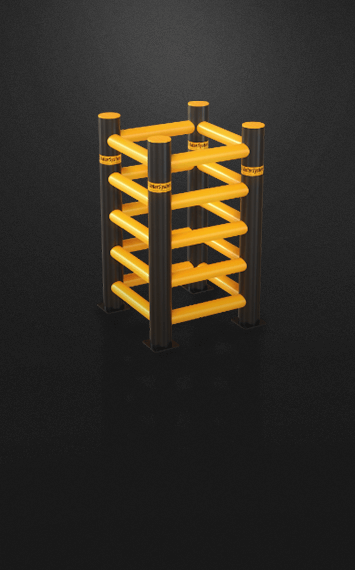
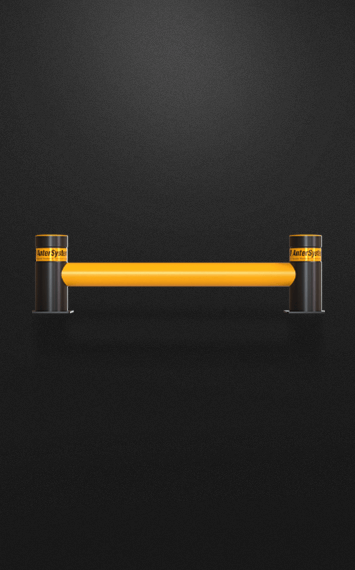
Anter System barriers are tested according to the PAS 13 methodology, and the results are documented. Their performance has also been confirmed in an independent assessment by TÜV Rheinland. Explore our pedestrian safety barriers and safety barriers, or contact us and we’ll help you choose the right solution for your facility.
Are you a distributor? Discover partnership opportunities with Anter System.