Our client, a packaging manufacturer, runs intensive forklift traffic between its production and warehouse halls. In facilities like this, one of the biggest safety challenges is limited visibility — particularly at technological gates, corners and passages between zones, where operators cannot see an approaching vehicle until the very last moment. The plant experienced dangerous situations in which a forklift leaving one hall would suddenly appear on the route of another vehicle.
The main problem occurred in areas where operators drove through gates connecting different parts of the facility. A forklift leaving one side was not visible to the operator approaching from the other side, which led to sudden braking, dangerous situations and collisions.
The greatest risk concerned collisions between forklifts, but improved visibility and earlier warning were also important for pedestrians moving near transport routes. The consequences of such events included not only risk to operators, but also damage to gates, guards, passageway infrastructure, forklifts and transported materials.
Abrupt braking was a hazard in its own right, even when no collision followed. A significant part of the material moved around the plant travels as rolls carried on pallets — a load that rests on the pallet without being fixed in place. A sudden stop is enough for such a roll to shift or fall off, and this did happen at the plant. A load that comes off the pallet endangers anyone nearby, damages the product itself and blocks the passage until it is cleared.
Following previous incidents, operators began to slow down significantly before each gate. This was a natural response to the hazard, but at the same time it was a solution based solely on caution. In practice, it meant approaching every gate as if another forklift could be just around the corner — and it led to a loss of internal transport flow, slower material movement and reduced operational efficiency.
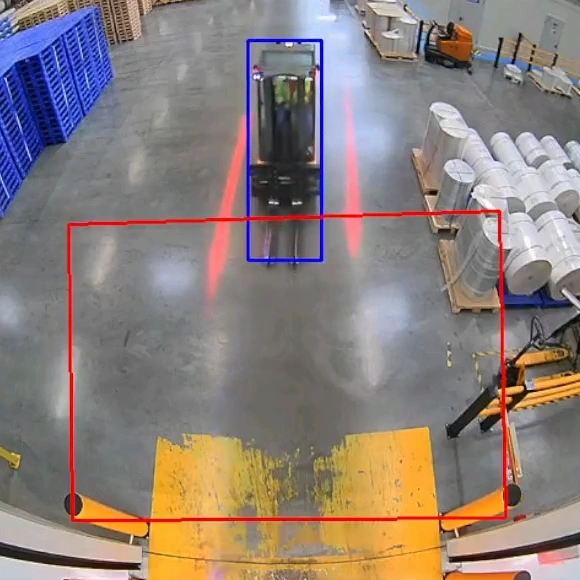
In many facilities, limited visibility is addressed with additional signage, mirrors, procedures or mandatory speed limits. These measures can support safety, but they often do not eliminate the actual problem — the operator still cannot see what is happening on the other side of the passage.
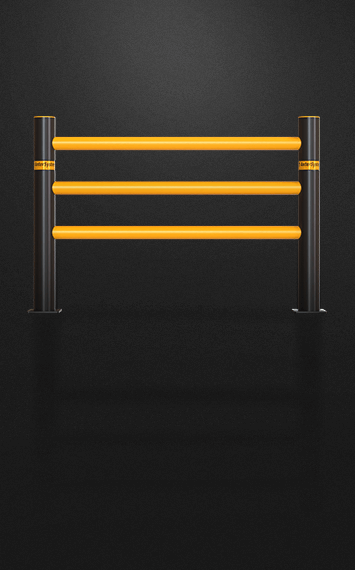
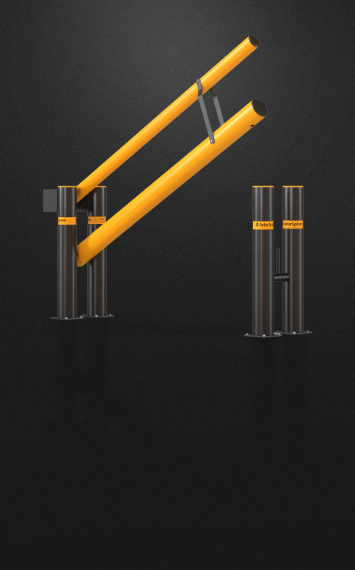
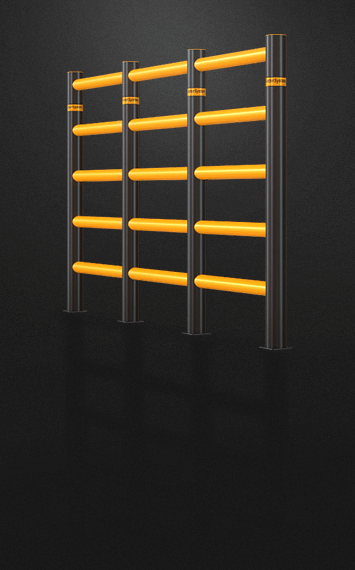
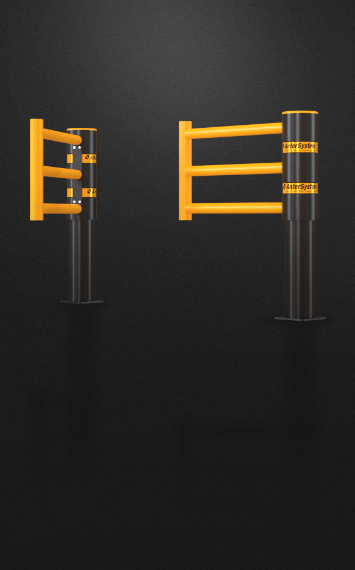
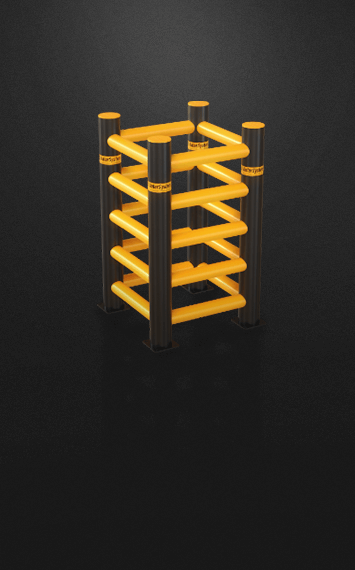
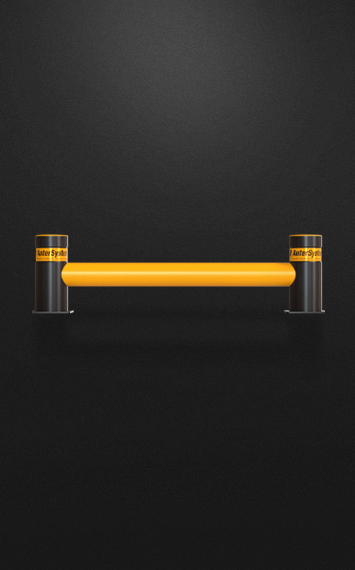
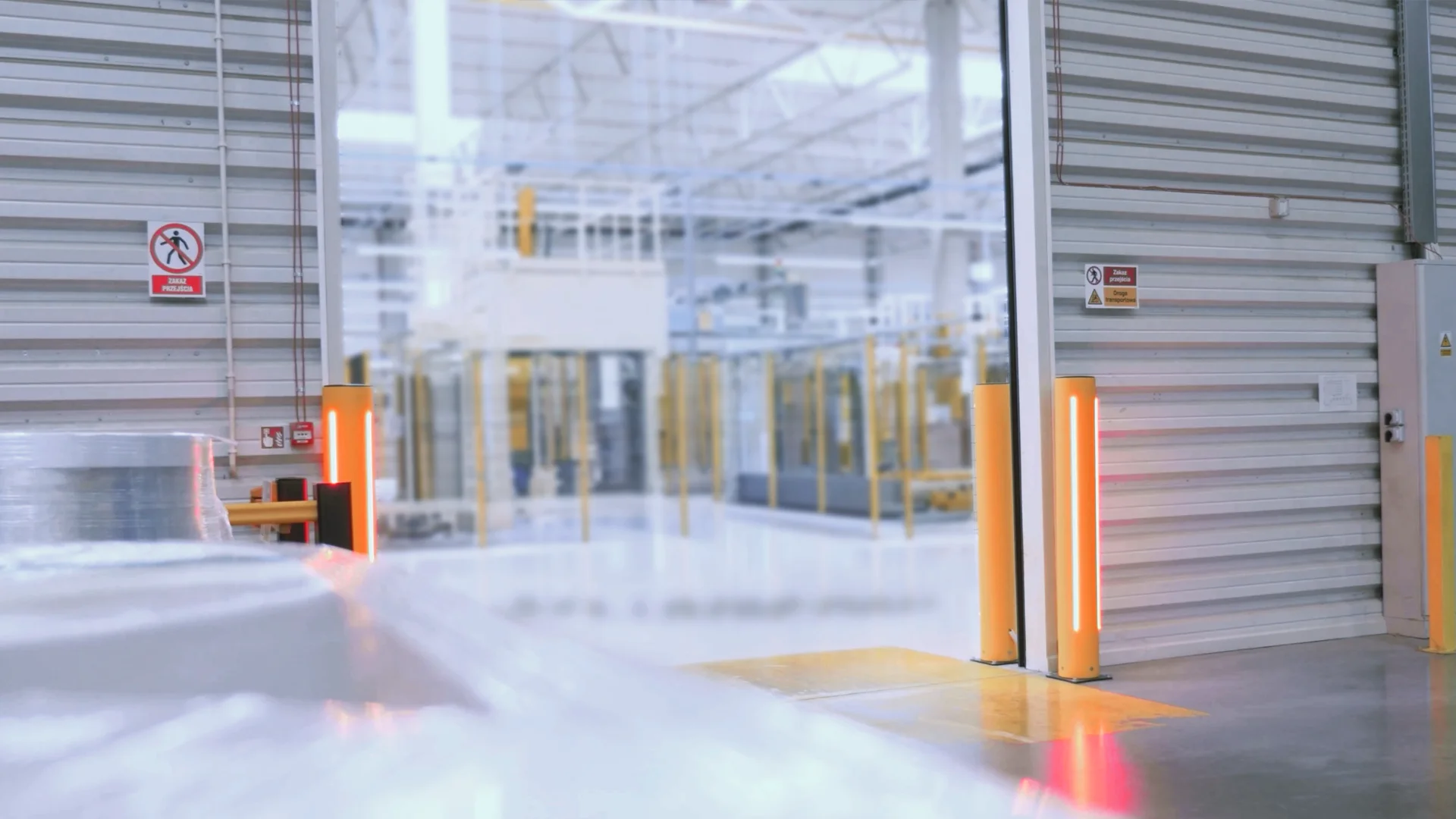
We implemented PA LED bollards with the Sense&Warn system, integrated with AI camera systems and UWB technology. The aim was to create a solution that actively warns about an approaching vehicle before the operator can see it.
The system uses AI-supported real-time camera image analysis, active LED signalling and synchronisation between both sides of the passage:
This is particularly important in intensive internal traffic, where safety should be supported by a repeatable, clear and reliable warning mechanism. Instead of relying mainly on caution, experience and reduced speed, the operator now receives information about movement on the other side of the passage before the vehicle becomes visible. The solution also supports pedestrian safety: in areas where pedestrians move near forklift routes, early warning about an approaching vehicle increases awareness and helps people react faster to traffic conditions.
Operational effects. Before the system was implemented, operators significantly reduced speed before each technological gate in response to previous collisions. The slowdown started approximately 3–4 metres before the passage, and only after passing the zone did the operator return to normal speed. There were 8 gates between halls in the facility, and each of them was used by an average of 20–30 forklifts per hour.
For the calculations, the following assumptions were used:
| Parameter | Before | After | Change |
|---|---|---|---|
| Effective travel speed at the gate | 3.5 km/h | 9 km/h | +157% |
| Travel time over a 4 m section | 4.1 s | 1.6 s | −61% |
Measured on site by an Anter System specialist together with the client’s representative. All values may be subject to measurement tolerance.
Slowing down at the gates caused a loss of approximately 2.5 seconds per passage. Although this is not a long time for a single passage, at the scale of the entire facility it represented a significant loss.
| Metric | Value |
|---|---|
| Number of gates between halls | 8 |
| Average number of passages through 1 gate per hour | 25 |
| Total number of passages per hour | 200 |
| Recovered time per passage | +2.5 s |
| Recovered travel time per hour | +8.3 min |
| Recovered working time per 8-hour shift | +67 min |
| Recovered working time per month (21 working days) | +23 h |
| Recovered working time per year (250 working days) | +279 h |
Estimates calculated from the assumptions listed above.
The annual time loss amounted to approximately 279 hours — the equivalent of more than 34 full 8-hour working shifts, or more than one month of work for one operator.
Greater predictability and fewer sudden reactions. The implementation of PA Sense&Warn helped increase traffic predictability in the areas that had previously generated the highest risk. Operators receive a clear warning signal before the other forklift appears in their field of view, helping them avoid sudden manoeuvres and abrupt braking. The system supports:
Business benefits.
PA Sense&Warn bollards integrated with AI cameras and UWB technology solved the problem of limited visibility at passages between halls. The system warns operators about approaching forklifts before the vehicles enter their field of view, which reduces the risk of collisions and sudden reactions, and at the same time restored the transport flow lost to precautionary braking.
This solution shows that safety in internal traffic does not have to rely on slowing down processes. Thanks to active warning, it is possible to increase the protection of operators and pedestrians, reduce the risk of damage and support smoother internal transport at the same time.
See our solution in practice — the video below shows PA Sense&Warn working with the AI camera system in the client’s facility.